Understanding Modern Life Through Food, Health & the Systems That Shape Them.


Explore the relationships shaping how we live.
Food does not exist separately from agriculture.
Human health does not exist separately from food, environment, culture, work, or the conditions of everyday life.
And many of the challenges shaping modern life cannot be understood clearly when we examine them one at a time.
Ana Intl explores the relationships between them.
Through essays, research, conversations, case studies, and education, we examine the forces shaping food, agriculture, human health, culture, leadership, and modern life, and ask what they reveal about how we might live, work, and build differently.
This is the learning side of Ana Intl.
An evolving body of ideas for people who want to understand the world more deeply, question assumptions that deserve another look, and develop clearer ways of thinking about what comes next.
Field Notes from Ana Intl
Essays, reflections, and long-form analysis
What becomes visible when we stop looking at things separately?
Field Notes is Ana Intl’s primary publication.
It explores the relationships between food, agriculture, human health, culture, leadership, and the conditions shaping modern life.
We follow questions across conventional boundaries.
How does the way food is produced influence human health?
What does burnout reveal about the environments in which people are expected to perform?
What can agriculture teach us about resilience?
How does infrastructure quietly shape health and behavior?
What happens when organizations optimize individual parts while weakening the whole?
What does regeneration mean beyond agriculture?
And what are we failing to see because we have learned to treat interconnected problems as separate?
Field Notes brings together research, observation, lived experience, and interdisciplinary inquiry to make these relationships easier to see.
We explore subjects including:
Food systems & public health
Agriculture & regeneration
Human vitality & environment
Leadership & modern work
Consumer culture & behavior
Longevity & quality of life
Hospitality & human experience
Infrastructure & resilience
Organizations & coherence
The future of modern living
The objective is not simply to explain what is happening.
It is to understand why it is happening, what it is connected to, and what those relationships might mean for the choices we make next.
Field Notes exists to make complex ideas more understandable, practical, and relevant to everyday life.
Go Deeper With Field Notes
For readers who want to follow the inquiry further.
Some questions deserve more than a passing explanation.
Paid Field Notes goes deeper through original research, long-form analysis, frameworks, case studies, and strategic interpretation.
It is for readers who want to move beyond headlines, fragmented information, and quick conclusions toward a richer understanding of the forces shaping food, health, business, leadership, and modern life.
Free readers can enter the conversation.
Paid members support the deeper work and receive access to Ana Intl’s most substantial essays, research, and analysis.
Nature’s Currency
Agriculture. Food. Human Health. The Future of Modern Life.
Podcast · Launching Soon
Hosted by Chandrima Ornvold
What if some of the most important questions about human health, resilience, business, and the future begin further upstream than we think?
Nature’s Currency is an Ana Intl podcast exploring the relationships between agriculture, food, human health, and the forces shaping modern life.
Through conversations, reflections, and interdisciplinary inquiry, each episode follows an important question beyond its conventional boundaries.
We examine the assumptions behind how we eat, work, produce, measure, organize, and define progress, and explore what becomes visible when those assumptions are questioned.
Season One: What We’ve Been Measuring Wrong
A season examining the difference between what modern systems are designed to measure and what may actually matter for long-term human, ecological, and organizational health.
Research & Case Studies
From ideas to evidence.
Ana Intl studies how principles such as resilience, interdependence, adaptation, and regeneration operate in the real world.
Our research and case studies examine places, organizations, projects, and systems to understand not simply what happened, but why it happened and what shaped the outcome.
We ask:
What conditions created the original problem?
What was the system optimized for?
Which relationships were overlooked?
What changed?
What happened as a result?
What can the experience teach us elsewhere?
Research allows Ana Intl to move between ideas and application, testing assumptions against evidence and learning from what happens in practice.
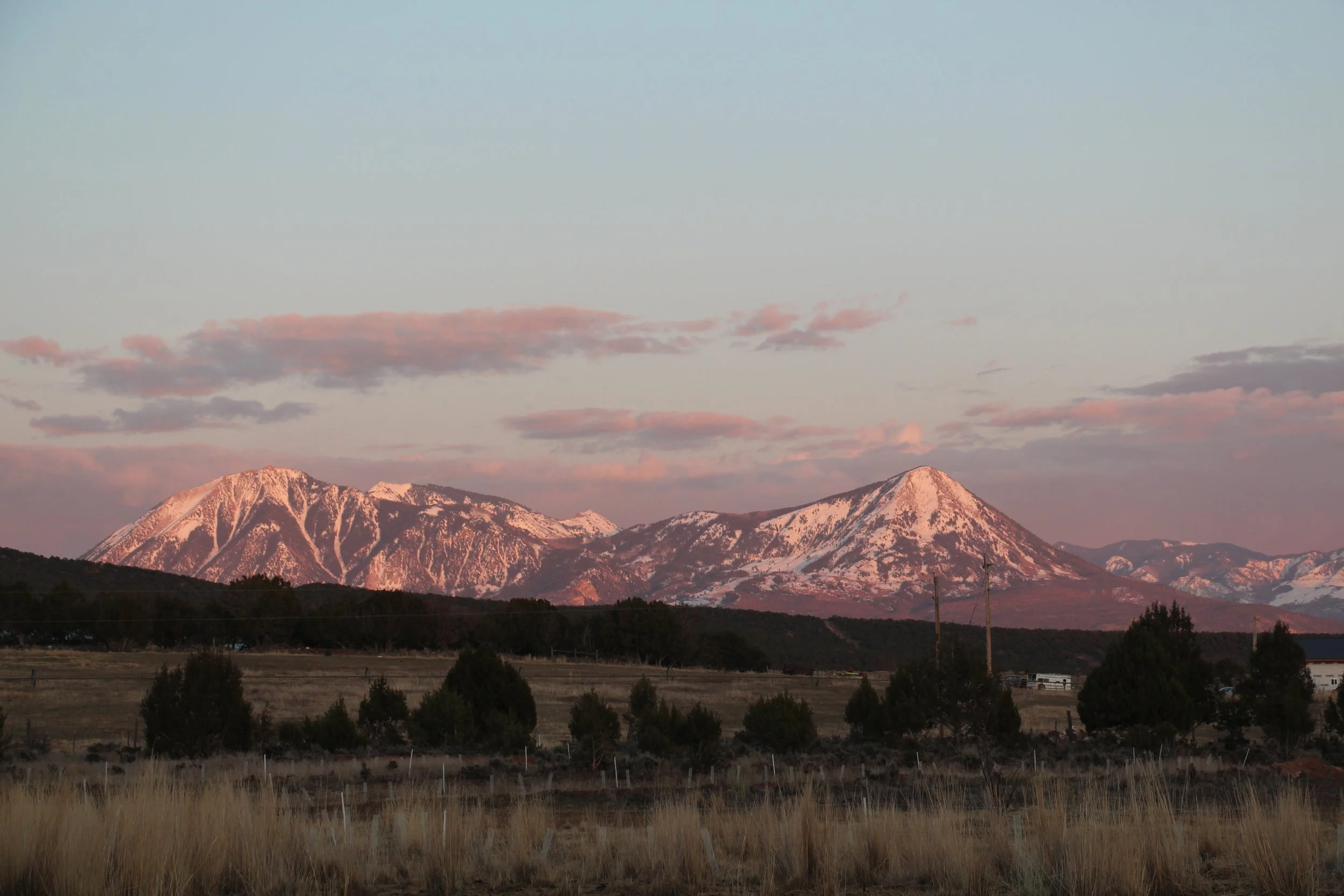
FEATURED CASE STUDY:
Regenerating the High Desert
Cedar Springs Farm · Hotchkiss, Colorado
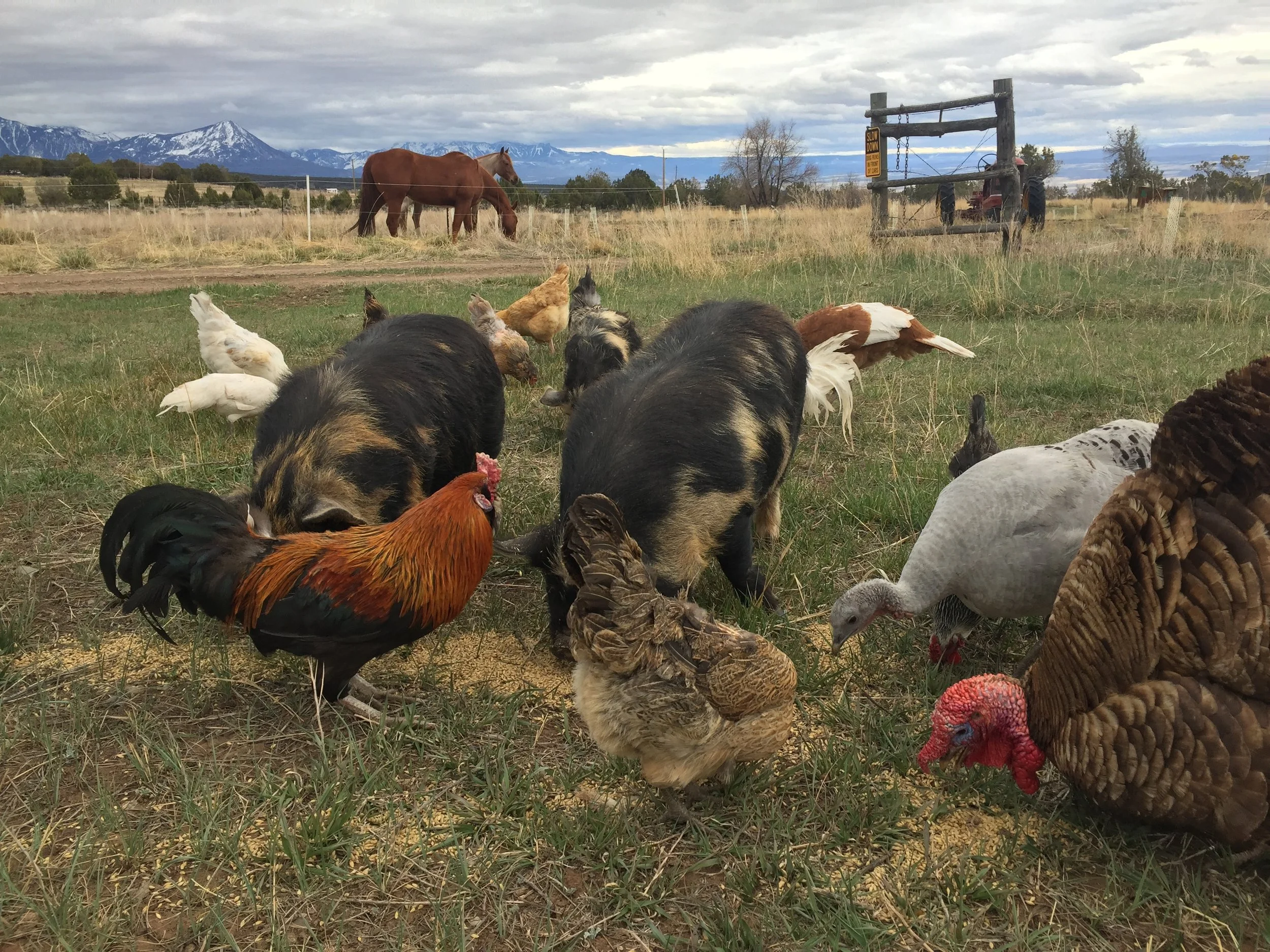
Cedar Springs Farm began with a difficult question:
What would allow degraded high-desert land to become healthier and more resilient over time?
Compacted soil, limited water retention, declining biodiversity, and increasing desertification pressure meant the challenge could not be solved through a single agricultural intervention.
The work required looking at the relationships between water, soil, plants, animals, climate, and food production.
Rather than treating each problem independently, the farm was approached as an interconnected system.
Water management, soil health, perennial plantings, biodiversity, livestock movement, and production were considered together, with the aim of creating conditions in which each intervention could strengthen the others.
-
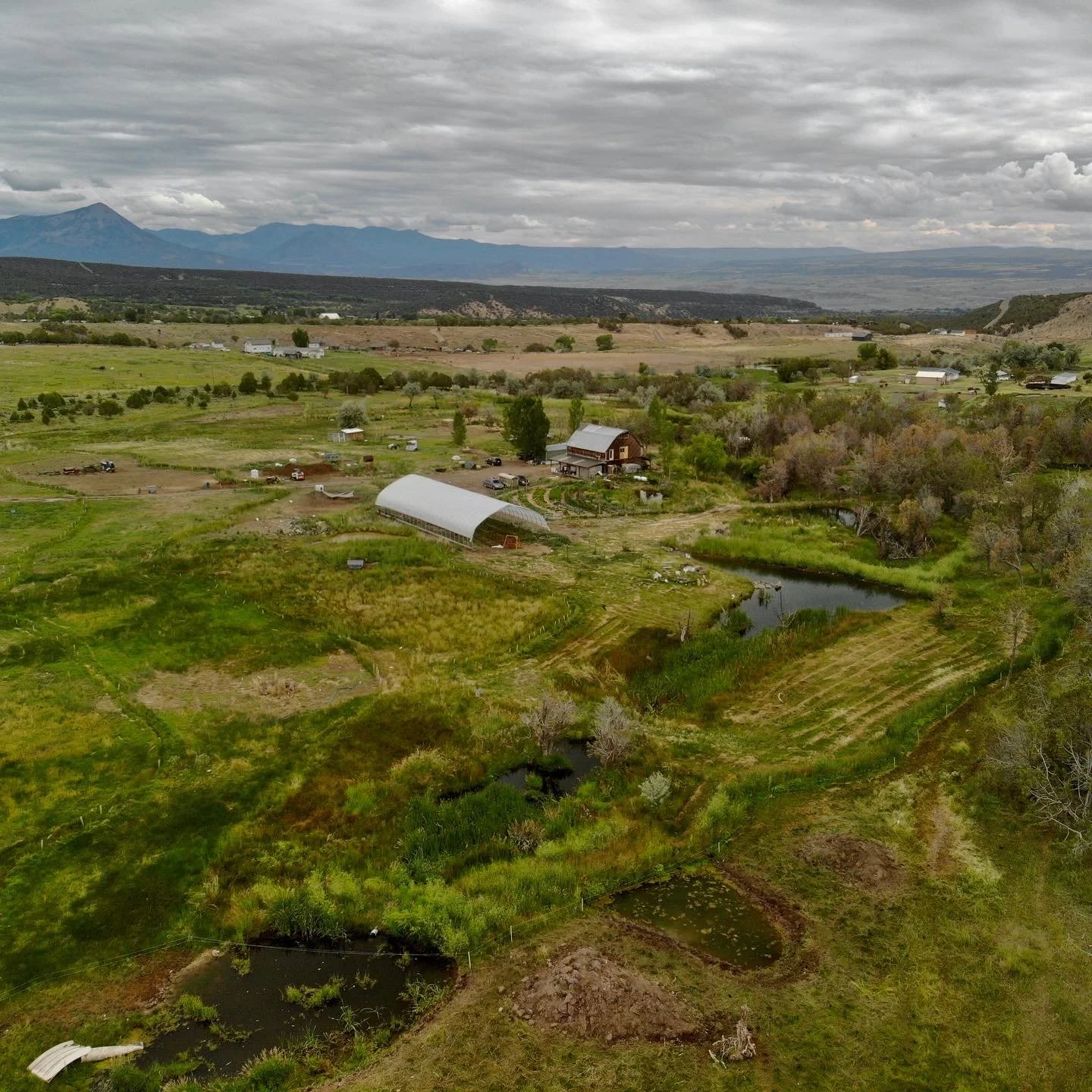
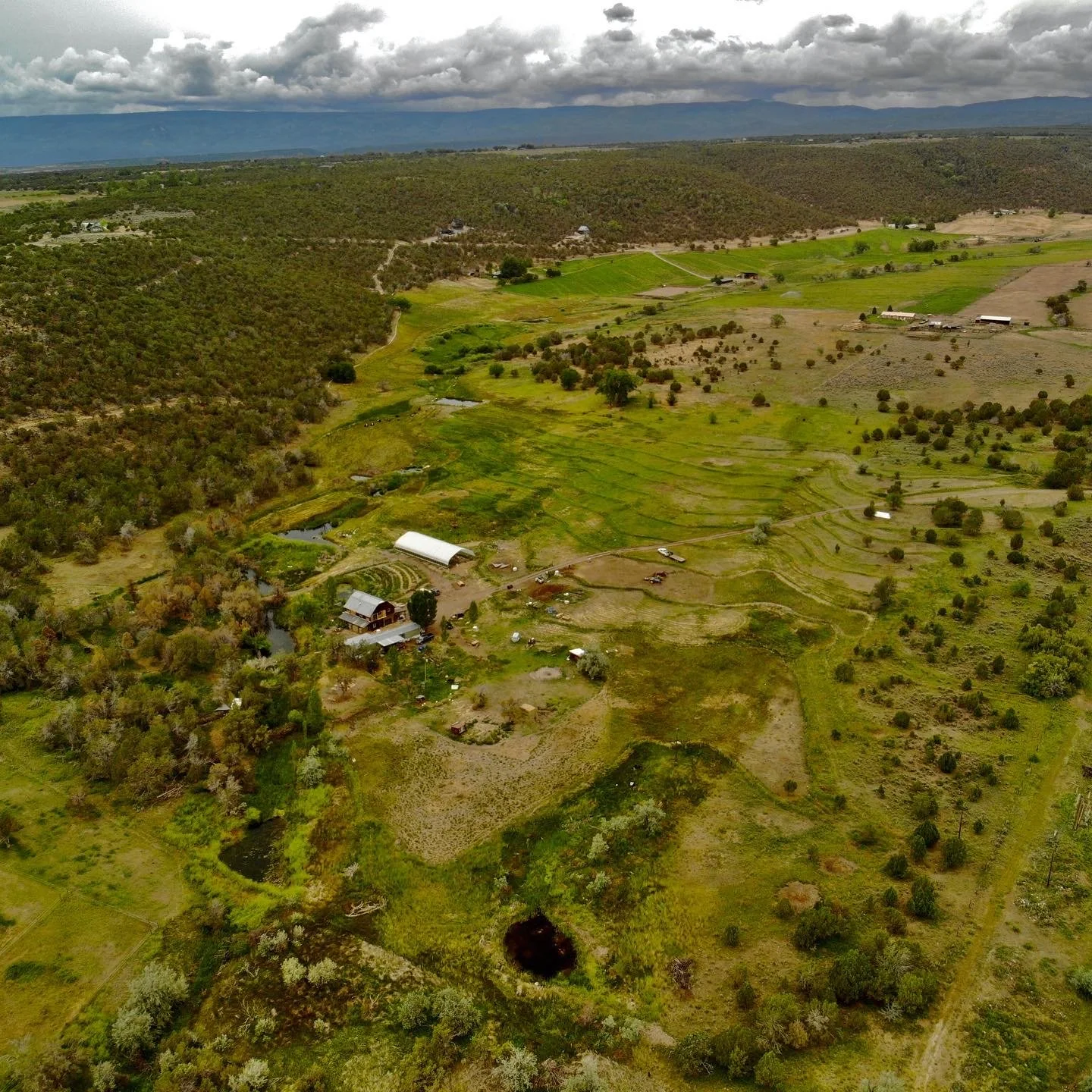
Regenerative land management principles were applied across the landscape to restore water systems, rebuild soil health, increase biodiversity, and support long-term agricultural resilience.
Rather than treating each element separately, the farm was designed as an interconnected living system where water, soil, plants, animals, and food production could strengthen one another over time.
Water & Earthworks
Swales, ponds, and water-harvesting systems were implemented to slow runoff, improve water retention, and gradually restore the landscape’s natural hydrology.
Rotational Grazing & Soil Health
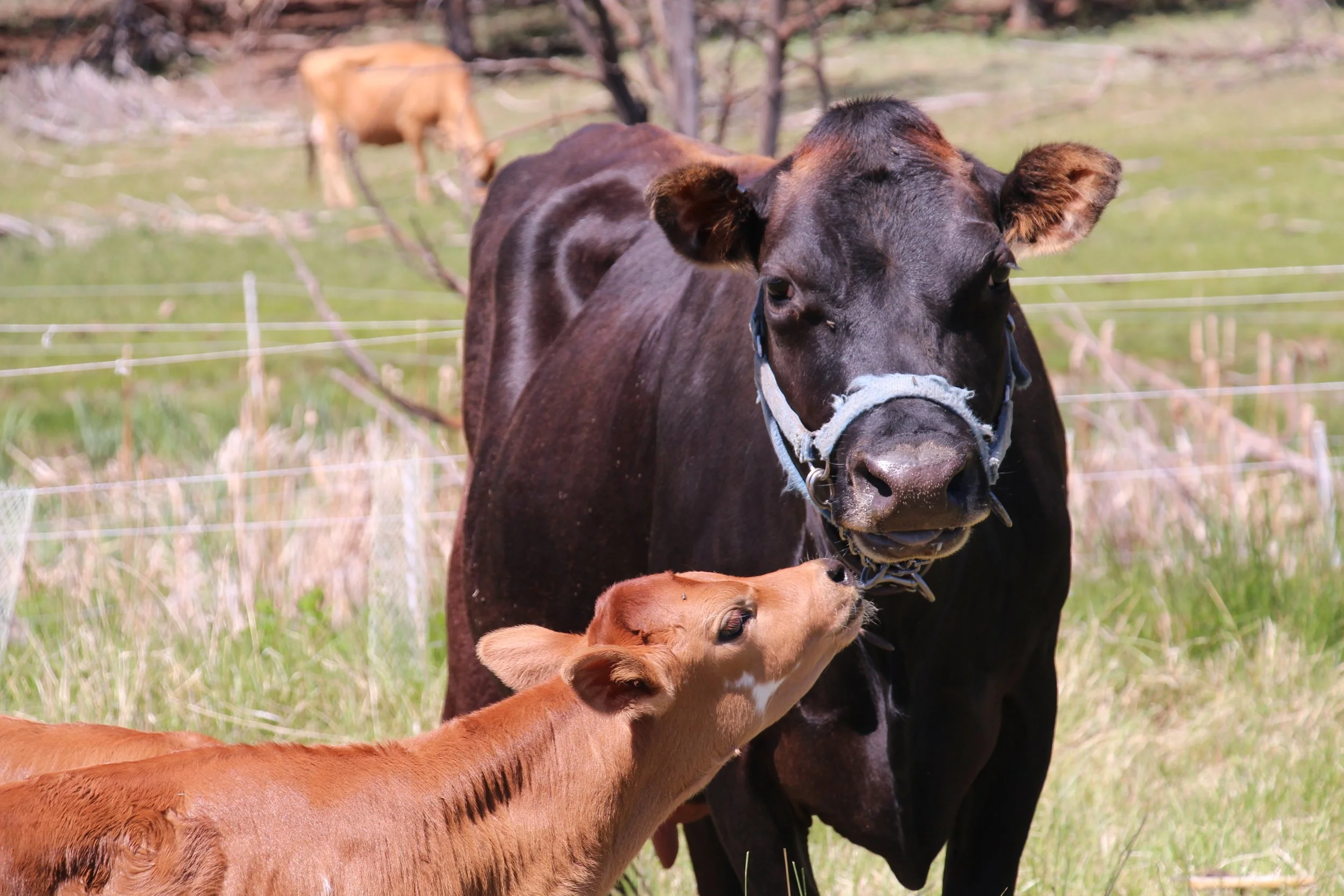
Multi-species rotational grazing systems were introduced to improve pasture health, support soil biology, increase fertility, and reduce invasive pressure naturally over time.
Agroforestry & Silvopasture
Thousands of perennial trees and forage species were integrated into silvopasture systems designed to support biodiversity, ecological restoration, shade, and long-term food production in arid conditions.
Integrated Livestock Systems
Adaptive livestock management combined rotational grazing, nutrient cycling, pasture regeneration, and animal welfare into a more resilient agricultural ecosystem.
Closed-Loop Ecological Design
Water systems, grazing systems, perennial agriculture, livestock, and ecological feedback loops were intentionally integrated to reduce external inputs and strengthen the long-term health of the land over time.
-
Over time, the property evolved into a functioning demonstration of ecological restoration, agricultural resilience, and long-term land stewardship.
The project resulted in:
improved water retention and restored hydrology
increased biodiversity and wildlife return
successful perennial crop establishment in arid conditions
healthier soil biology and reduced external inputs
integrated nutrient cycling and regenerative pasture systems
diversified food production across the landscape
regional agroforestry propagation and restoration efforts
More importantly, the farm became a living example of what becomes possible when agriculture is designed as an interconnected system rather than a collection of isolated interventions.
The project demonstrated how resilience can emerge over time when land, water, food production, livestock, and ecological health are designed to work together rather than compete against one another.
-
Working in agriculture revealed something much larger than food production alone.
The conditions shaping healthy soil, resilient ecosystems, and long-term land stewardship are deeply connected to the conditions shaping human health, organizational culture, leadership, and modern life itself.
The quality of our environments matters.
How we grow food.
How we structure work.
How we build communities.
How we care for land, people, and long-term well-being.Over time, these conditions shape resilience, vitality, behavior, and the future of the systems we live inside every day.
This work became part of a larger exploration into what healthier ways of living and building could look like in the modern world.
Over time, the project became an example of a larger principle at the heart of Ana Intl’s work:
Healthy systems depend on the quality of their relationships.
Agriculture makes that interdependence unusually visible.
Change the soil and you influence the plants.
Change the plants and you influence water, animals, food, and resilience.
Change enough relationships and the behavior of the larger system begins to change.
The lesson is not that every organization should behave like a farm.
It is that examining conditions, relationships, and consequences can reveal possibilities that remain invisible when we optimize individual parts in isolation.
Education & Learning
Ana Intl is developing educational experiences rooted in the relationship between food, agriculture, human vitality, leadership, and long-term resilience.
Future offerings include:
workshops
cohort-based learning
digital education
immersive learning experiences
executive intensives
strategic frameworks & tools
These programs are designed to help individuals and organizations better understand the conditions that shape health, behavior, performance, and long-term sustainability over time.
Begin With Understanding
Before we decide what to change, we have to learn to see what is shaping the outcome.
Many of the forces influencing modern life are still discussed separately.
Food.
Health.
Agriculture.
Work.
Leadership.
Environment.
Culture.
Infrastructure.
Economics.
But our lives do not experience them separately.
They interact continuously, shaping how people eat, work, recover, behave, connect, adapt, and thrive.
Ana Intl exists to investigate those relationships and make them easier to understand.
Because better action does not always begin with an answer.
Sometimes it begins with seeing the question differently.